
Join us
Good software reaches further with the right partners. Whether you want to build on our technology, sell our solutions, or simply open doors for the customers you already work with - there is a level of partnership built for you.

Sitemule's begins not in a boardroom or a strategy document, but in the server rooms of the mid-1990s, on a platform the rest of the industry had already begun to overlook: the IBM i.
IBM i, then known as AS/400, was - and remains - one of the most reliable platforms ever built. But reliability was not the same as completeness. In the mid-1990s, our customers were running their entire businesses on the platform, yet they encountered the same challenges again and again:
How do we monitor the health of the system around the clock? How do we send documents and messages from the machine to customers and business partners?
The operating system did not provide a satisfactory answer. So we built the missing capabilities.
BlueNote was developed to monitor the system itself - jobs, message queues, and system events - and alert operators before minor issues developed into downtime. For businesses where operations stopped when IBM i did, monitoring was not a luxury. It was a necessity.
BlueSeries was developed to handle communications. Fax, email, FTP, XML invoicing, and SMS messaging were brought together in a single solution, turning IBM i into a central communications hub.
Business applications could now send invoices, confirmations, and alerts in the format and through the channel the recipient required. Long before integration became an established concept, BlueSeries was moving millions of business documents between companies - directly from the platform where the business logic already resided.
Together, BlueNote and BlueSeries addressed some of the most fundamental business needs of the time. The products spread across the IBM i platform, installation by installation and country by country. Along the way, they built something that cannot be bought: trust.
In the early 2000s, the world changed. Our customers’ systems still worked. They contained decades of proven business logic and had demonstrated their value through stable operation. But the world around them had changed.
New employees expected a browser instead of a green screen. Business partners wanted web services rather than file transfers. IT departments wanted open standards, modern development languages, and better integration between systems. The typical recommendation at the time was consistent: tear down what already existed and replace it with something new.
We disagreed. The existing systems were not the problem. They were a valuable asset. What was missing was a bridge between the proven and the modern.
IceBreak became that bridge. As a web application server running natively on IBM i, IceBreak made it possible to build modern web applications and web services directly on top of existing programs and databases.
RPG and COBOL logic that had been running reliably for decades could now communicate over HTTP, power web pages, and expose services. Only limited adaptations were required - with no middleware, no external servers, and no need to discard existing investments. IceCap completed the modernization of the user experience.
The solution transformed traditional 5250 screens into modern, browser-based user interfaces. The next generation of users gained the experience they expected, while the proven applications underneath continued to execute the business logic they had always handled.
Together, the four products now covered the entire modernization journey: applications, integration, communications, monitoring, and user interfaces. They became a central part of daily operations for hundreds of companies worldwide - and they continue to be used on the IBM i platform today.
After two decades, it became clear that IceBreak, IceCap, BlueSeries, and BlueNote had become more than four standalone products.
They were four proven, high-performance foundations, each refined through many years of real-world production use. At the same time, they addressed four fundamental challenges that virtually every modernization initiative eventually encounters:
Web applications and service-oriented architecture - the legacy of IceBreak
Screen and user interface transformation - the legacy of IceCap
Messaging and communications - the legacy of BlueSeries
System monitoring - the legacy of BlueNote
As standalone products, each solved its own part of the modernization challenge. But customers were not looking for four separate tools. They wanted one coherent path forward: a realistic and scalable way to modernize without putting the entire business at risk through a large and disruptive replacement project.
That led us to a decision that would define the next chapter: The products would become engines.
We did not choose to phase them out or rewrite them from scratch. Instead, we did exactly what we have always recommended that our customers do with their existing systems: we preserved the proven core and modernized around it.
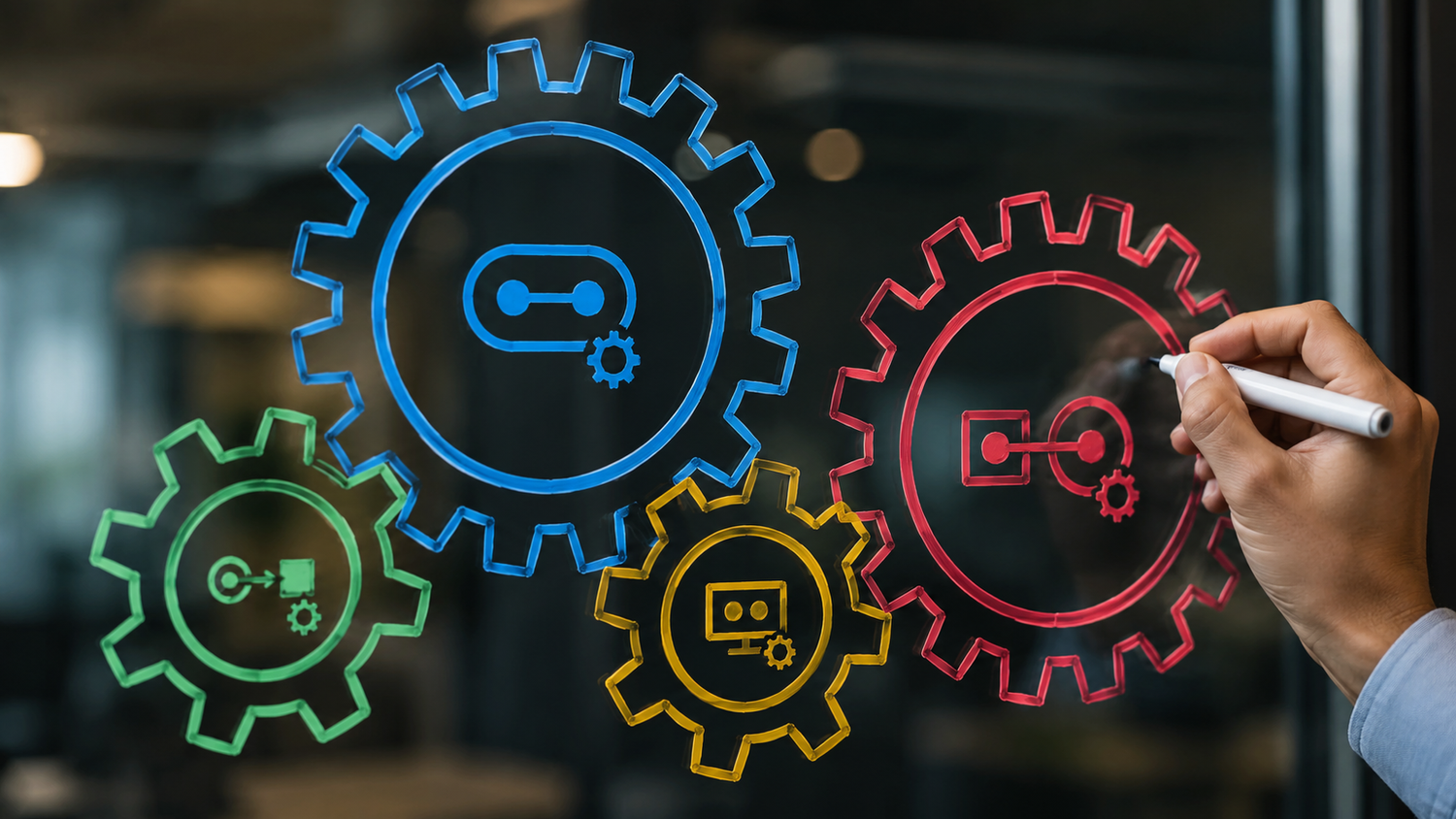
The four products were transformed into fully integrated runtime engines that deliver their functionality as services to a new generation of purpose-built modules. Everything was brought together in a single browser-based workspace: Sitemule Platform.
It became the clearest proof of our own modernization philosophy:
“We modernized ourselves in exactly the same way we modernize our customers.”
In Sitemule, the four engines realize their full potential. What were once four standalone tools have become one connected ecosystem: eight purpose-built modules powered by four proven engines. The platform runs natively on IBM i - without middleware and without the need for external infrastructure.
The engines handle the core functionality beneath the surface:
Above the engines sit the purpose-built modules that support the entire modernization journey. They range from visual and functional modernization to domain-driven applications, AI-powered and context-specific guidance, and documentation for both technical staff and end users.
True to where the story began, the engines continue to support the platform that made them possible. Core capabilities have been released as open source, helping to engage developers across the IBM i ecosystem. At the same time, partners use the engines as replacements for outdated technology and as a foundation for strengthening their own solutions.
Looking back, the common thread is clear. In the 1990s, we filled the gaps in the operating system. In the 2000s, we built a bridge between existing systems and the modern world. Today, the four products that have supported hundreds of companies for decades have become the engines taking them forward into the future.
IceBreak, IceCap, BlueSeries, and BlueNote did not retire. They were promoted.

Good software reaches further with the right partners. Whether you want to build on our technology, sell our solutions, or simply open doors for the customers you already work with - there is a level of partnership built for you.